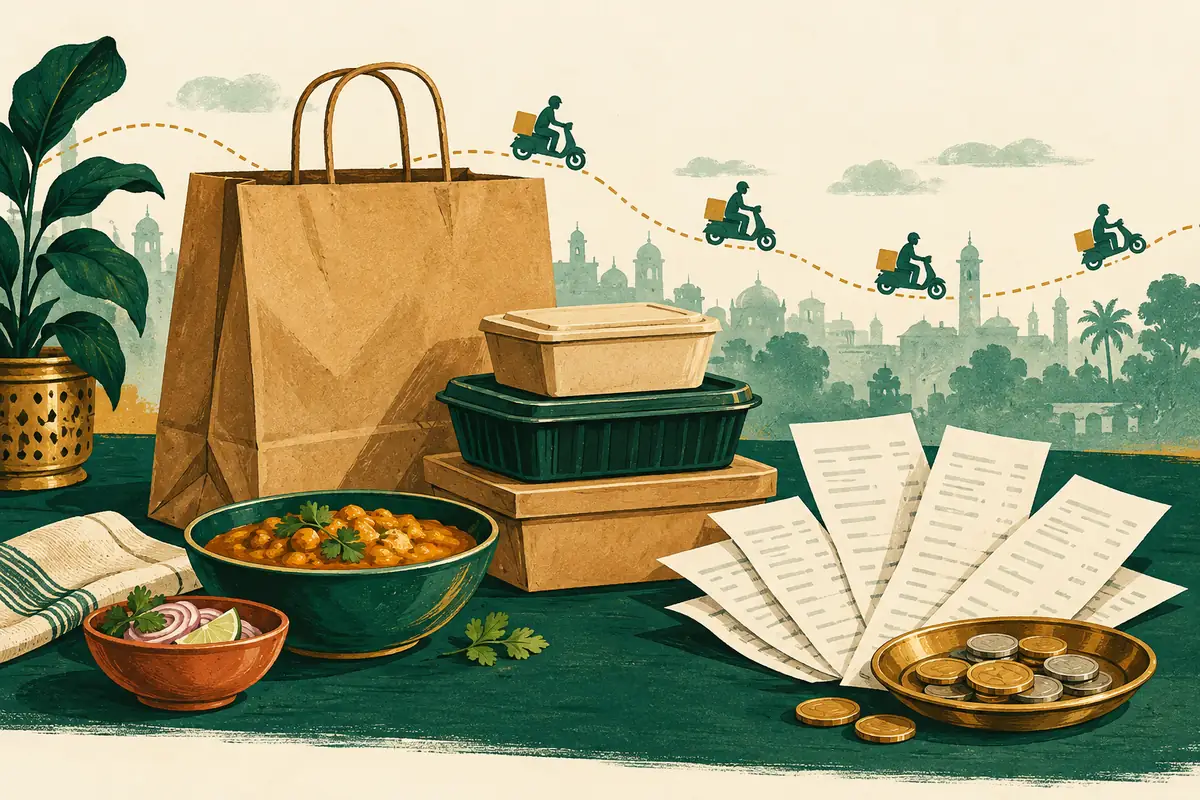
Food delivery apps are engineered to make spending invisible. The food price looks reasonable, then the delivery fee, the platform fee, the surge, the packaging charge and the tip each add a little, and the total is 30 to 50 percent above the menu price before you notice. Multiply that by a habit, four or five times a week, and you have one of the largest discretionary line items in a young urban Indian's budget, hiding in plain sight as 'just dinner'.
The decade maths
Take Arjun in Gurgaon, who orders in four times a week. His average all-in order, with fees, is ₹450. That is ₹1,800 a week, about ₹7,200 a month, and roughly ₹86,000 a year. Over ten years he spends about ₹8.6 lakh on delivery. If he had cut that to twice a week and invested the difference at a 12 percent return, the invested half alone would grow to several lakh. The same money, same decade, two very different outcomes, and Arjun never made a single dramatic decision.
| Orders per week (₹450 each) | Per month | Spent over 10 years | If half were invested at 12 percent |
|---|---|---|---|
| 2 times | ₹3,600 | ₹4.3 lakh | Modest |
| 4 times | ₹7,200 | ₹8.6 lakh | Around ₹4 lakh of foregone wealth |
| 6 times | ₹10,800 | ₹13 lakh | Around ₹6 lakh of foregone wealth |
How to right-size the habit, not kill it
- Count honestly first. Open your app order history and total the last month. The number is almost always higher than your guess, because the fees hide it.
- Cap the frequency, not the joy. Going from five orders a week to two keeps the convenience for the nights you need it and removes most of the cost.
- Redirect the gap into investing, the same way you would with any small habit. If you halve the habit, start a SIP for what you saved, or the money just leaks elsewhere.
- Watch the fees, not just the food. The delivery, platform and packaging fees are where the markup lives. A pickup or a direct restaurant order often saves 30 percent on the same meal.
Frequently asked
What to do next
- Open your delivery apps and total your spend for the last full month, fees included.
- Run that through the food delivery calculator to see the ten-year and invested-instead numbers.
- Set a weekly cap you are comfortable with, keeping the convenience for the nights you need it.
- Start a SIP for the amount you save, so the cut becomes wealth and not just less spending.