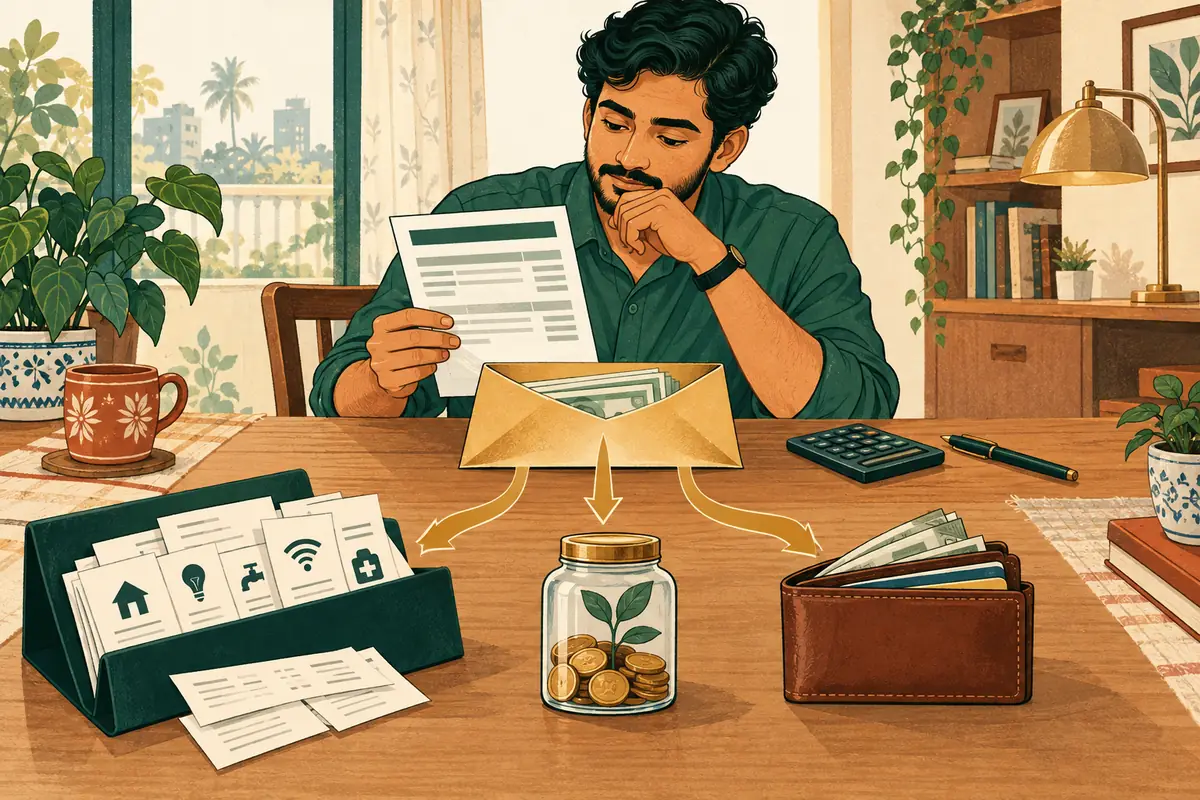
Almost every money mistake people spend their thirties fixing was made in the first two years of earning. Not dramatic ones, just the habit of spending first and saving whatever survives, which is a rounding error by the 28th.
The order, and why it is this order
- Automate the transfer on salary day. Not a reminder, an actual standing instruction dated for the day after your salary lands. Saving what is left over does not work, because nothing is left over.
- Clear expensive debt. A credit card at 42 percent or an education loan at 10 percent both beat any investment you could make with the same rupee. Our cheapest way to borrow guide ranks what to clear first.
- Build one month of expenses, then three. This is the thing that stops a bad month becoming a card balance.
- Start one index fund SIP, in its Direct plan, at whatever amount is genuinely spare. Even ₹500 matters more now than ₹5,000 will at 35, because these rupees compound the longest.
- Only then think about tax saving, and only if you are actually in a slab where it helps.
| If your monthly take-home is | Living at home, save | Paying rent, save |
|---|---|---|
| ₹25,000 | ₹5,000 | ₹2,500 |
| ₹40,000 | ₹8,000 | ₹4,000 |
| ₹60,000 | ₹12,000 | ₹6,000 |
| ₹1,00,000 | ₹20,000 | ₹10,000 |
Frequently asked
Twenty percent if you live at home and have no rent, ten percent if you pay rent. The exact figure matters less than automating it on salary day, because a smaller amount that actually leaves your account every month beats a larger one you intend to save and never do.
What to do next
- Set the standing instruction today, dated one day after your salary lands.
- Work out what you owe and at what rate, then clear the most expensive first.
- Say no to every insurance-plus-investment product for at least a year.