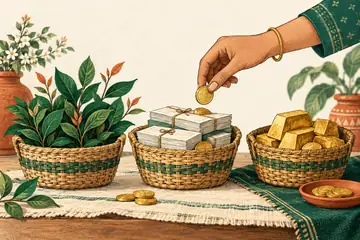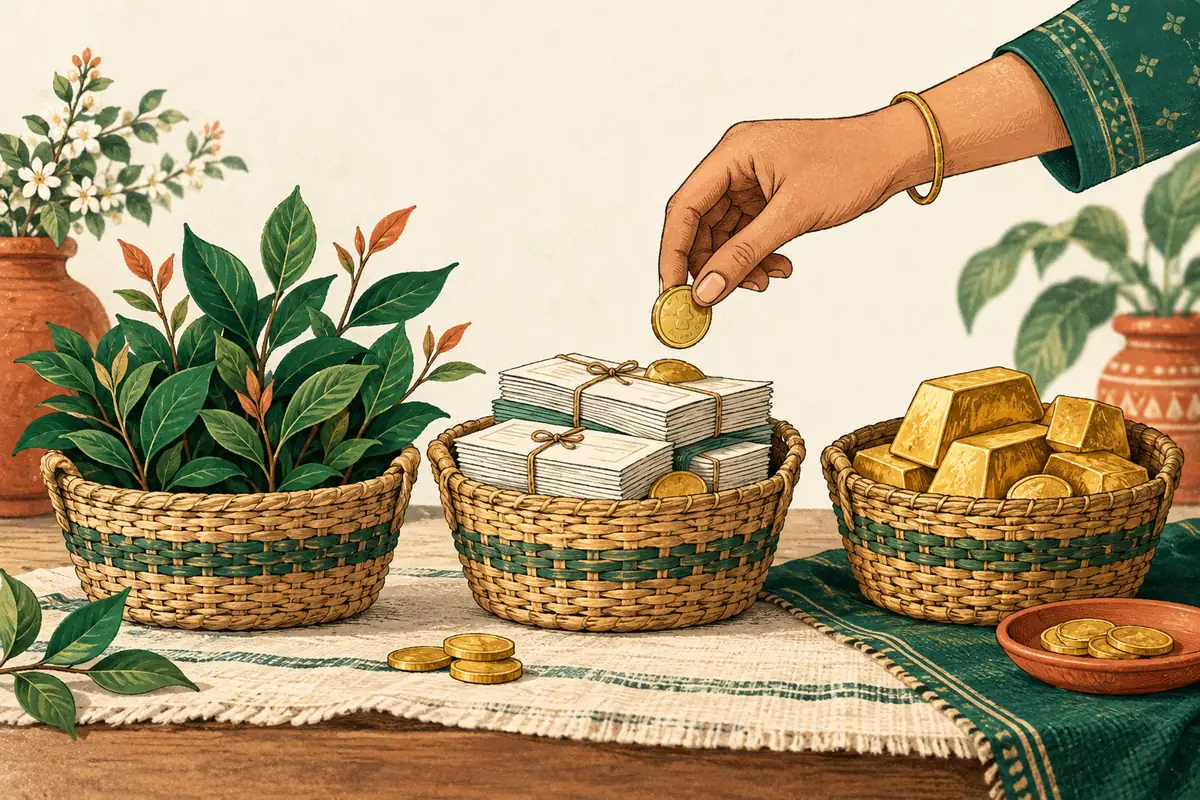
Indian households hold an enormous amount of gold, and most of it was bought for reasons that have nothing to do with portfolio theory. This article is not an argument against that. It is about the money you are deliberately investing, where the form you choose changes the return more than the gold price does.
The four ways, compared
| Form | Real cost to hold | Liquidity | Best for |
|---|---|---|---|
| Jewellery | 8 to 25% making charges, lost on resale | Poor, valued below purity | Wearing, not investing |
| Coins and bars | 1 to 5% premium, plus locker or risk | Moderate, buyback discount applies | People who want the metal |
| Digital gold | About 3% spread, plus platform terms | Good | Very small amounts |
| Gold ETF or fund | 0.4 to 1% a year expense ratio | Excellent, sells like a share | Most investors |
The gap between the first row and the last is the entire article. Buy ₹1 lakh of gold as jewellery and roughly ₹8,000 to ₹25,000 of it disappears the moment you leave the shop, and it does not come back when you sell. Buy the same ₹1 lakh as an ETF and you pay a few hundred rupees a year. The metal performs identically in both cases.
How much is sensible
- 5 to 10 percent for most people building long-term wealth. Enough to diversify, not enough to drag the portfolio.
- Up to 15 percent if you are close to retirement and want the volatility buffer.
- Count the jewellery you already own before adding more. Most Indian households discover they are already at 20 or 30 percent and do not need any.
- Rebalance once a year. Gold's job is to be sold when it has run and bought when equity has.
Frequently asked
As a diversifier at 5 to 15 percent of a portfolio, yes. As a primary growth asset, no. Gold produces no income and its long-run real return has been modest compared with equity, but it often moves independently of shares, which is genuinely valuable when equity markets fall.
What to do next
- Count the gold you already own before buying more. Most households are already over-allocated.
- For investment, use an ETF or fund. Keep jewellery in the wearing category.
- Cap it around 10 percent and rebalance annually.
Put this article to work
Asset Allocation RecommenderEquity/debt/gold split based on age and risk tolerance.Open calculator →Real Return CalculatorInterest minus inflation minus tax, your actual gain.Open calculator →Inflation Impact CalculatorWhat today's money will actually buy in the future. Cash is not safe.Open calculator →