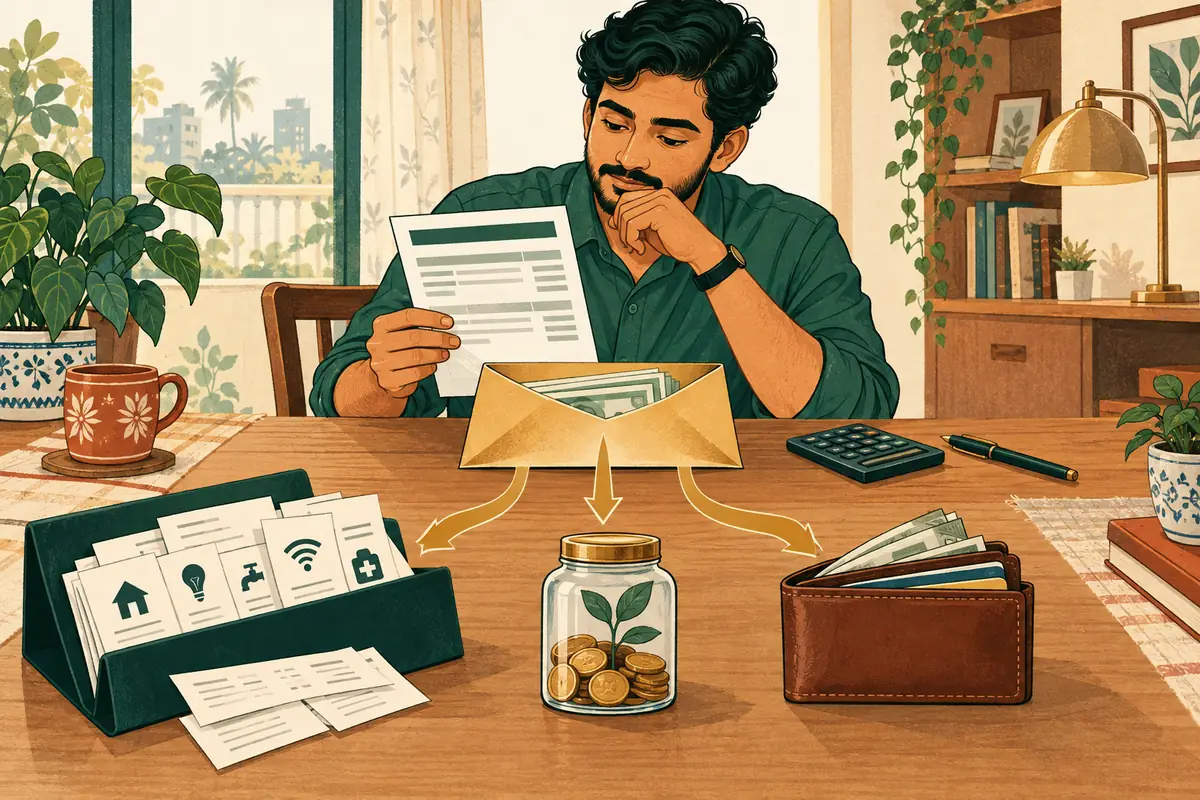
The fear on ₹20,000 is that saving is something for people who earn more, and that there is no point until the next raise. The opposite is true. The habit of moving a fixed amount on salary day matters more than the amount, and it is far easier to build on a small salary than to start after a lifestyle has grown into a bigger one.
A ₹20,000 budget, two ways
Use the amount credited to your account, not CTC. Both examples total ₹20,000 and include family support, a health-cost allowance and annual bills. They are hypothetical budgets, not city price surveys. If your household contribution already covers food, move the duplicate allowance to savings or another real obligation.
| Monthly category | Living at home | Renting in a city |
|---|---|---|
| Rent or household contribution | ₹4,000 | ₹6,500 |
| Food and groceries | ₹2,000 | ₹3,500 |
| Travel | ₹1,500 | ₹1,500 |
| Phone, internet and utilities | ₹500 | ₹1,000 |
| Additional family support | ₹1,000 | ₹1,000 |
| Insurance and health-cost allowance | ₹1,000 | ₹1,000 |
| Wants: outings, shopping, subscriptions | ₹2,500 | ₹1,500 |
| Pot for annual bills and repairs | ₹1,000 | ₹1,000 |
| Monthly unplanned buffer | ₹1,000 | ₹1,000 |
| Saved on salary day | ₹5,500 | ₹2,000 |
| Total | ₹20,000 | ₹20,000 |
The renter saves 10 percent; the person at home saves 27.5 percent. Rent explains almost all of the gap, which is why a shared room or a cheaper commute does more than any amount of cutting back on tea. If your rent is ₹9,000 rather than ₹6,500, this renter budget has a ₹2,500 hole, more than its entire savings line, and small cuts cannot close it. The housing arrangement or your income needs attention instead.
The same structure works at the next steps up: read saving on a ₹25,000 salary and saving on a ₹30,000 salary. When a raise comes, decide where it goes before the first bigger salary lands.
What your payslip may already be saving
If your payslip shows an EPF deduction, part of your salary is already going into retirement savings, with a matching contribution from your employer. If your employer is covered by ESIC and your wages are ₹21,000 a month or less, a 0.75 percent deduction gives you and your family access to medical care through ESIC. Know what these cover before you decide how much to set aside for health costs, but do not treat them as your emergency fund: EPF is long-term money and is not meant for routine withdrawals.
The order to save in
- Keep enough in your spending account for bills due before the next salary. A savings transfer that causes a missed payment is set too high.
- Build a starter cushion of ₹3,000 to ₹5,000 in an accessible bank account, enough for a phone repair or a medicine bill without borrowing.
- Work towards a few months of essential expenses, one month at a time.
- Clear costly debt, such as a credit card balance or a high-interest app loan, before investing.
- Once the buffer is steady, consider a small recurring deposit or a ₹500 SIP and raise it with every increment.
In the renter example, the first six rows add up to ₹14,500 of essential monthly costs, so three months is ₹43,500. That is a long project on this salary, and that is fine: the starter cushion is what keeps a bad week from turning into a loan. The emergency fund guide explains where to keep it.
What actually moves the needle
- Price housing and commuting together. A cheaper room an hour away can cost more once daily travel is added.
- Set an automatic transfer for the day after salary credit, so saving happens before spending.
- Avoid EMIs and buy now pay later for phones and gadgets. A no-cost EMI still commits next year's salary.
- Plan weekday meals and set a monthly delivery allowance. Small orders several times a week add up faster than one big outing.
- Grow the income side. A few hours a week of tuition or freelance work can add more than any cut; see how to earn ₹10,000 a month from home, and run any job offer through our scam checker before replying.
The first ninety days, realistically
In month one, track where the money goes and pick a salary-day transfer you can keep up. In month two, fix one large cost, whether rent, travel or a recurring payment, and start the annual-bills pot. In month three, compare the plan with what actually happened, and raise the transfer only if it will not push you into borrowing.
At ₹2,000 a month, three months builds ₹6,000 before interest. At ₹5,500 a month, it builds ₹16,500. A ₹20,000 cushion takes ten months at ₹2,000, or about four months at ₹5,500. These are contribution sums, not investment forecasts, and they are worth more than they look: they are the difference between handling an emergency and borrowing for one.
When the buffer is in place, starting a SIP with ₹500 shows a small first step for long-term money. If you are not sure which earning or saving moves fit your situation, Earnwise builds a plan around your hours and skills.
What to do next
- Write a budget from the ₹20,000 actually credited, including annual bills.
- Set an automatic salary-day transfer to a separate emergency account.
- Check your payslip for EPF and ESIC so you know what cover you already have.